EV Charger Rebates in the Fraser Valley: Eligibility and How to Apply
If you are putting a Level 2 EV charger in a Fraser Valley home, the rebate can help. It just should not be the thing that decides the electrical design. The rebate rules are specific, the paperwork matters, and the installation still has to meet BC electrical requirements.
Checked October 13, 2026: the provincial Go Electric BC residential charging rebate is listed as open and ongoing. For most single-family homes, duplexes, triplexes, 4-plexes, side-by-side row homes, and mobile homes on permanent foundations, the current home charger rebate is 50 percent of eligible costs, up to $350 for a Level 2 charger. Indigenous individuals may qualify for 75 percent of eligible costs, up to $750. Rebate availability is subject to funding and current program rules, so check the official page before you buy the charger.
This guide is for Fraser Valley homeowners in places like Chilliwack and Abbotsford who want to know whether the rebate is worth planning around, what documents they need, and when an electrician should look at the house before anything gets ordered.
The Current Home EV Charger Rebate Amount
The residential rebate is for a Level 2 charger installed at a qualifying home. Go Electric BC lists the home EV charging station rebate at 50 percent of eligible costs, with a maximum rebate of $350. The same page lists a higher Indigenous individual amount of 75 percent of eligible costs, up to $750.
BC Hydro gives the same standard home charger number for its customers: up to 50 percent of the purchase and installation cost, to a maximum of $350. The rebate can help, but it will not pay for the whole job. In my opinion, the right way to think about it is simple: the rebate helps with part of a proper charger installation. It does not make a weak panel strong, it does not make an unsafe circuit safe, and it does not guarantee that your whole project will be covered.
For deeper install-cost context, read our Fraser Valley cost guide: How Much Does Level 2 EV Charger Installation Cost in the Fraser Valley?. If your main question is charger placement, this garage guide is the better starting point: Can You Install an EV Charger in Your Garage?.
Who Qualifies for the Residential Rebate
The home has to be in B.C. and it has to be the applicant's primary residence. Go Electric BC also says the home must have a dedicated parking space and must have been built at least six months before the charger installation date.
Eligible home types include single-family detached homes, including homes with a secondary suite, duplexes, triplexes, 4-plexes, side-by-side row homes, and mobile homes on a permanent foundation. Renters may be eligible, but they should expect consent paperwork. Unit owners and renters in apartment, condo, or townhouse complexes with five or more units may fall under the separate multi-unit residential building (MURB) rebate program, subject to its requirements.
For Chilliwack and Abbotsford homeowners, the utility path is usually BC Hydro. FortisBC matters for FortisBC electric customers, but a FortisBC gas account by itself is not the same thing as being a FortisBC electric customer for this charger rebate. That distinction is worth checking before you start the application.
What Costs Can Count Toward the Rebate
BC Hydro lists eligible costs for the purchase and installation of the charger. That includes the purchase cost of an eligible charger, labour and construction costs for installation by a licensed electrician, electrical or related permit costs, electrical design required for the charging station, and the purchase cost of an EV power management device if one is required. Those are eligible expense categories, subject to the applicable rebate caps, not a promise that the full project will be automatically reimbursed.
That sounds broad, but there are limits. The charger must be a permanent Level 2 installation, wall-mounted at the electrical service address in the application. BC Hydro also says the rebate is not available for costs to only install a 240V outlet. A proper charger install and a simple outlet-only job are not treated the same way.
The charger itself has to be eligible. It has to be new, not used or refurbished, and purchased, not leased, from a supplier in Canada. It also has to be approved for sale and use in Canada with accepted Canadian electrical safety certification, such as cUL, ULC, cETL, CSA, or cQPS. It has to be a Level 2 charger, 208V or 240V, with a NACS J3400 or SAE J1772 standard plug head. It can be plug-in or hardwired, but it cannot be portable. BC Hydro also says Tesla charging stations are no longer eligible, so do not assume a charger qualifies just because it fits your vehicle.
This is where a little planning saves a lot of annoyance. Choose the charger from the eligible list before you buy it. Then have the electrical side checked before the install gets booked.
The Paperwork You Should Keep
The rebate is not a handshake. It is a document trail.
If a licensed electrician installs the charger, BC Hydro says the application may require the charger invoice showing proof of payment, an installation invoice showing proof of payment and itemized costs, charger model details, and the electrical permit number. The installation invoice should be clear enough that the program can see what work was performed.
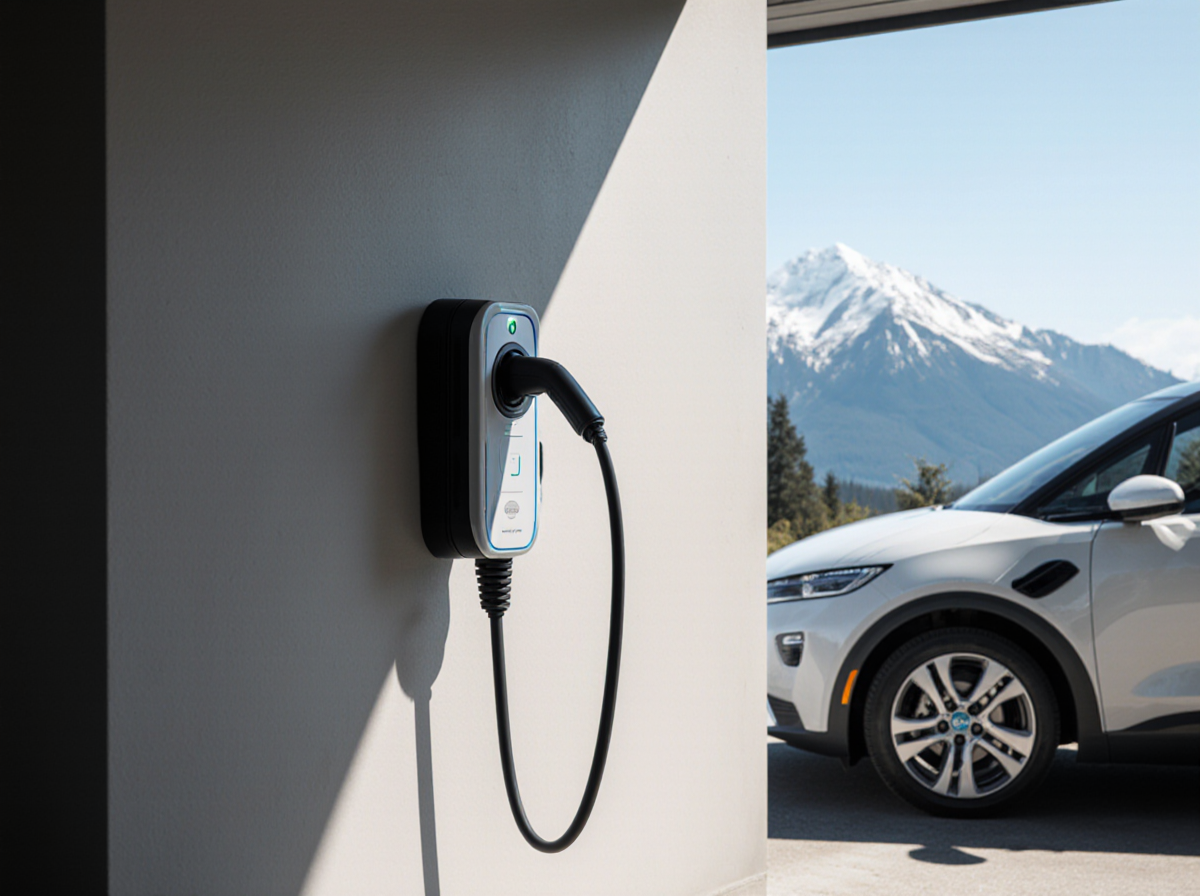
BC Hydro also requires a photograph of the installed charging station. Take a clear photo after installation and keep it with your invoices and electrical permit information.
If you already had a 240V outlet and only bought a charger to plug into it, BC Hydro treats that as a different application path. You still need proof that the outlet was permitted when it was originally installed. If electrical work is needed to install the EV charger, do not treat it as a pre-existing outlet situation.
Permits matter. In many cases, a licensed electrical contractor applies for the permit on your behalf. Depending on where the property is located, the permit may come through Technical Safety BC or through the municipality. Either way, keep the permit number with your rebate file.
How to Apply Without Mixing Up Vehicle and Charger Rebates
The home charger rebate is not a dealership rebate. Vehicle purchase incentives are a different thing. For the charger, Go Electric BC says to apply through your electricity provider, either BC Hydro or FortisBC, after the charger is installed.
The current official process is straightforward:
- Read the current Go Electric BC and utility program guide before buying anything.
- Get consent if you rent or if another owner needs to approve the installation.
- Choose a rebate-eligible Level 2 charger.
- Have the charger installed with the required electrical permit.
- Apply for the rebate within six months of installation. BC Hydro also states this as 180 days.
Do not leave the paperwork until the end of month five. If an invoice is missing a model number, proof of payment, or itemized labour detail, you want time to fix that before the deadline gets tight.
Common Rebate Mistakes We See
The first mistake is buying the charger before checking the current eligible charger list and confirming the manufacturer's specifications. Eligibility changes, so do not rely on an older listing, an old screenshot, or a charger that looks similar to one that used to qualify. That can turn a $350 rebate into zero pretty fast.
The second mistake is assuming the rebate covers every electrical problem the house has. It does not. If the panel is full, the service is undersized, or the charger location needs a long wire run, those realities still exist. Some costs may be eligible as part of the charger installation, but the program does not guarantee every panel or service upgrade cost is reimbursed.
For related electrical-upgrade work, see our CleanBC rebates and electrical upgrades guide. Eligibility is separate from the EV charger rebate.
The third mistake is confusing program types. Strata, apartment, condo, and workplace charging programs are separate. They can have pre-approval steps, building-level requirements, and different application rules. If you are dealing with a multi-unit residential building, start with the official Go Electric BC multi-unit residential charging rebate. If this is for an employee parking area, start with the official Go Electric BC workplace charging rebate. Do not use the single-family home rebate rules for those projects.
When to Ask an Electrician Before You Buy the Charger
Ask early if your home has a 100A service, an older or crowded panel, a detached garage, a long driveway run, aluminum branch wiring, or other big electrical loads like a heat pump, hot tub, suite, shop, or electric water heater. A Level 2 charger is a real load. It is not just another outlet.
For a Chilliwack installation, start with our EV charger installation Chilliwack page. For Abbotsford, use our EV charger installation Abbotsford page. Those pages cover the local service side without turning this rebate article into a full installation manual.
A good pre-install check should confirm panel capacity, breaker space, charger location, wiring route, load calculation, permit path, and whether a load management device could avoid a larger upgrade. As of October 13, 2026, BC Hydro also offers an additional $200 rebate for eligible single-family home customers who install an EV power management device. Ask about the current requirements when panel capacity is the sticking point.
Official Rebate Links to Check Before You Purchase
Before you buy the charger, check the official pages directly:
- Go Electric BC residential charging rebate
- BC Hydro rebates for single-family home chargers
- BC Hydro rebate-eligible charger list
Rules change. Funding changes. Eligible charger lists change. Check first, then buy.
Need the Electrical Side Checked?
If you want us to come in and take a look, Taurus Electric can check your panel, the charger location, the likely permit path, and the wiring route before you commit to equipment. We will tell you if the job looks simple, if load management makes sense, or if the house needs more electrical work before a Level 2 charger is a good idea.
Contact Taurus Electric for EV charger installation help in Chilliwack, Abbotsford, and across the Fraser Valley.