
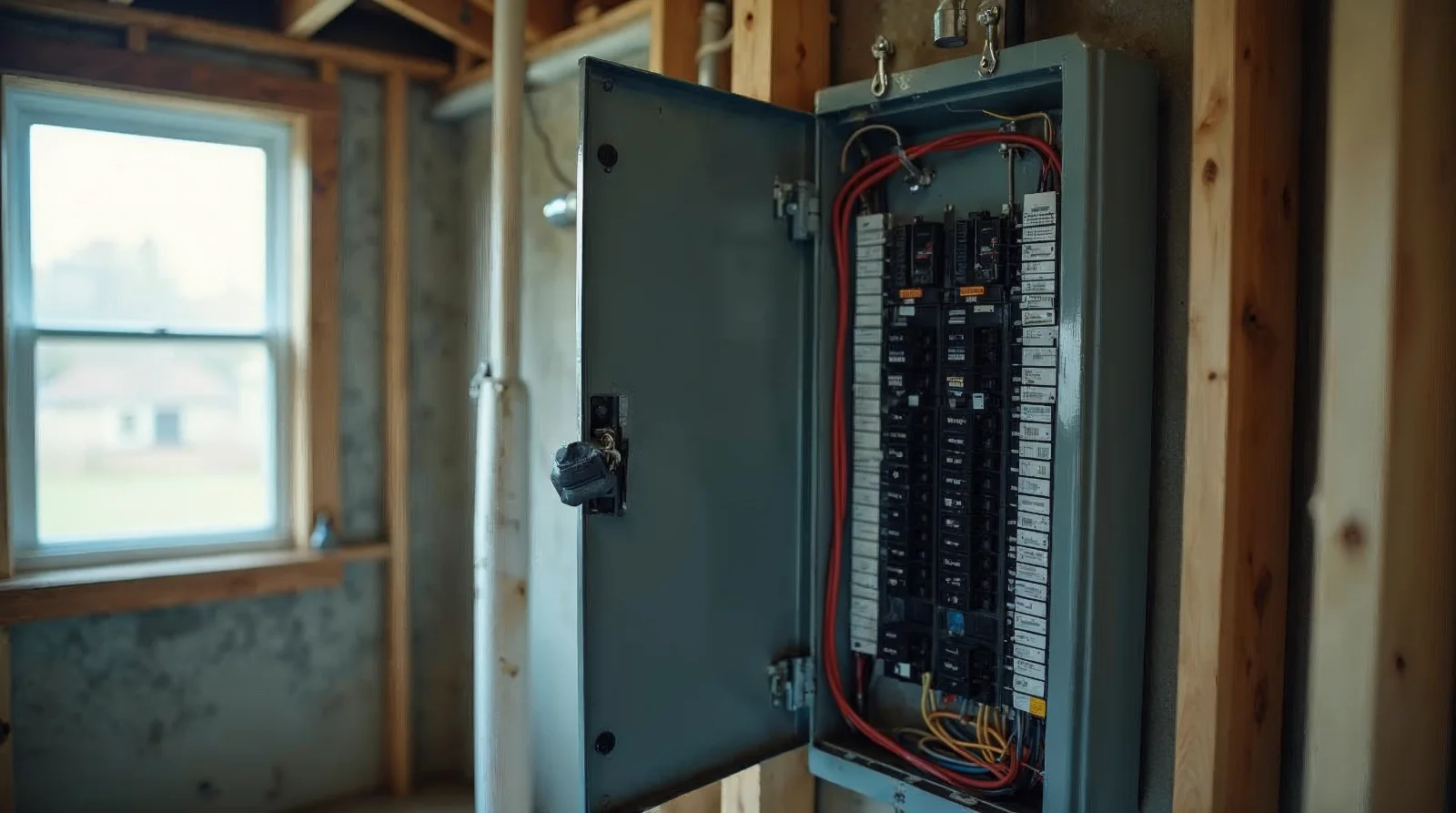
How Much Does an Electrical Panel Upgrade Cost in Abbotsford? (2026 Pricing Guide)
You went to price an EV charger, and the quote came back with a line you were not expecting: your panel cannot take it. Now you are looking at a much bigger number than the one you started with, and nobody has told you what that number actually is. So here it is up front. In most of the Fraser Valley, the electrical panel upgrade cost in Abbotsford lands somewhere between $2,500 and $5,000 for a standard residential service.
That is a wide range, and the width is the honest part. Where your house falls inside it comes down to things a contractor cannot see from your driveway. Below is what moves the number, what the price does and does not include, and how to tell whether you need the upgrade at all.
What an electrical panel upgrade costs in Abbotsford in 2026
$2,500 to $5,000, installed, permitted and inspected, for a typical single-family home going to a 200 amp service. Older homes with complications sit at the top of that range or past it. A newer house with an accessible panel and a healthy meter base sits near the bottom.
Anyone who quotes you a firm price over the phone, without seeing your meter base, is guessing. That is not a knock on them, it is just what happens when the biggest cost variables are outdoors and behind a cover. A real number comes after somebody looks at the service entrance, the mast, the panel location and what is actually in the existing box.
What the price includes
A standard upgrade quote covers the new panel and the breakers that populate it, the electrical permit, the inspection, the labour to pull the old panel and land every circuit in the new one, and coordinating the BC Hydro disconnect and reconnect so the house is dead while the work happens. Circuit labelling and a load calculation come with it. That last item matters more than people think, and it is the thing a cheap quote quietly skips.
What it usually does not include
These land as separate line items, and they are where a $3,000 job turns into a $5,000 one:
- Drywall repair and paint. A new panel is a different size than the old one. Something has to be patched, and most electricians do not finish walls.
- Service mast or meter base replacement. If the mast is rotten, undersized or pulling away from the wall, it gets replaced. This is common on Abbotsford homes built before the mid-1980s.
- Trenching on an underground service. If the existing conductors are too small for 200 amps, the run from the transformer has to be redone, and that means digging.
- Pre-existing code issues. Knob and tube in the attic, a bonded neutral where it should not be, missing grounding electrodes. An inspector will flag these, and they get fixed before the service passes.
100 amp to 200 amp, and when 200 is actually necessary
The default assumption is that every house needs 200 amps now. It does not, and a proper load calculation will tell you which camp you are in.
An 1,800 square foot house on gas heat, gas hot water and a gas range, adding one Level 2 EV charger, will very often survive on 100 amps. The calculation has room in it, and load management on the charger can create more. That is a real answer and it saves you several thousand dollars.
Add a heat pump, then a hot tub, then a second charger, and it does not. Electrification stacks fast. Every gas appliance you swap for an electric one comes out of the same budget, and a 100 amp service that works fine today can be underwater two renovations from now. If the plan over the next five years includes a heat pump, sizing for it once is cheaper than doing the service twice.
The 100 amp to 200 amp upgrade cost in BC is much the same whichever way the calculation lands, which is why it is worth running the numbers before you commit. If you are running a shop, a multi-unit building or anything with three phase equipment, that is a different conversation and it belongs with commercial electrical services, not a residential panel swap.
The four things that move the price most
The condition of the meter base and service mast. This is the single biggest swing. A mast that is sound gets reused. A mast that is corroded, undersized or has water tracking down into it gets replaced, and that is labour on a ladder plus new hardware plus another coordination point with BC Hydro.
Overhead versus underground. Overhead service is cheaper to upgrade, because the utility side of the work is a disconnect and a reconnect at the weatherhead. Underground can mean new conductors from the transformer, and once a trench is involved the landscaping bill is part of the project whether anyone quoted it or not.
Where the panel lives and how you get to it. A panel on an unfinished basement wall is a straightforward day. A panel in a finished closet, behind a furnace, or in a crawlspace you have to crawl through on your elbows adds hours. Fraser Valley crawlspaces are wet more often than not, which does not make anybody faster.
What the walls look like afterward. Related to access, but worth separating, because it is the cost people forget entirely. Cutting into finished drywall means patching, taping, sanding and painting, and if the wall is textured or panelled it means matching something that may not be matchable.
Permits, inspection and BC Hydro coordination in Abbotsford
Every panel change in this province is permitted work. An electrical service upgrade permit in Abbotsford comes from Technical Safety BC, which is the provincial safety regulator, not from City Hall. The City of Abbotsford handles building permits, and if your project involves structural work or a renovation around the panel you may need one of those too, but the electrical permit itself is provincial.
A licensed contractor pulls it, and a certified Field Safety Representative has to be named on the application. That FSR is the person on the hook for the installation meeting the BC Electrical Code, and they are the one who requests the inspection. It is very important that whoever you hire is actually licensed to do this, because a permit pulled under somebody else's licence is a problem you inherit when you sell the house.
Permit fees for a residential service change run roughly $300 to $400, and that is normally built into your quote rather than billed to you separately. Ask, so you know which you are looking at.
Then there is BC Hydro. They disconnect the service so the work can happen and reconnect it afterward, and their schedule is not your electrician's schedule. This is the part of the project with the least control in it.
How long it actually takes
The physical work is usually one day. Pull the old panel, set the new one, land the circuits, label everything, get it inspected.
The calendar is a different story. Permit, contractor availability, the BC Hydro disconnect window, the inspection, and the reconnect all have to line up, and two to four weeks from signed quote to finished job is normal. Plan for the power to be off for most of one working day. Move anything out of the freezer that you care about.
Why it is cheaper alongside an EV charger or heat pump

If you already know a charger install or a heat pump is coming, do the panel at the same time. One mobilisation, one permit, one inspection, one set of wall repairs, one disconnect and reconnect from BC Hydro. Split those across two visits six months apart and you pay for every one of them twice.
There is a rebate angle too. BC Hydro runs programs on heat pumps and EV charging infrastructure, and the terms change, so check what is live before you book rather than assuming what was available last year still is.
Do you actually need one, or can you get away without
Some houses genuinely need this and some do not. A fuse box, a Federal Pacific Stab-Lok panel, a Zinsco panel, or a box with no spare breaker spaces left are all real reasons to move, and the first three are reasons regardless of what you are adding. Insurers know those names too, and some of them will not write a policy on a Stab-Lok. If you are seeing warm breakers, scorch marks or recurring nuisance trips, that is the panel telling you something. The warning signs are worth reading in detail.
If none of that applies and the load calculation says you have headroom, you have headroom. Do not let anyone upsell you into a service you do not need. This is not DIY work either way: a panel change means working at the service entrance, and the only people who should be doing it are licensed and permitted.
If you want a real number instead of a range, we will look at your meter base, run the load calculation and tell you what your house actually needs, including if the answer is nothing. Start with our project estimator, or get in touch with our Abbotsford team and we will come take a look. If you already know a panel upgrade is what you need, that page covers what the job involves.