House Rewiring in Chilliwack

Your insurer flagged the wiring, or the inspector did, or you opened a wall and found something older than the last owner. We'll tell you what you've got, what actually needs replacing, and what it costs.

Get Your Free Quote
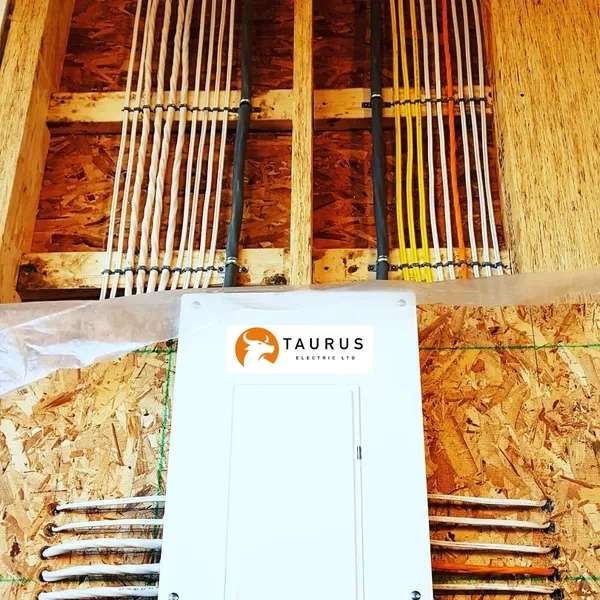
New electrical cables run neatly through the framing above a Taurus-labelled panel during a rough-in, an example of Taurus Electric's work.
What We Do

What's in Your Walls?

You can usually get a good idea of your wiring without opening anything up. Look at the cable where it enters the panel, along the joists in an unfinished basement, or in the attic. Don't take covers off outlets or switches on a live circuit. If you're not sure what you're looking at, that's what we're for.


What You Might Find

  • Knob-and-Tube. Single cloth-covered wires held off the framing by ceramic knobs and run through ceramic tubes, with no ground. Most common in houses wired roughly before 1950.
  • Aluminum Branch Wiring. Dull silver conductors, often with "AL" or "ALUMINUM" printed on the cable jacket. Found in some houses wired roughly from the mid-1960s to the late 1970s.
  • Older Ungrounded Copper. Two-prong outlets and no ground wire in the box. A three-prong adapter doesn't add a ground; it just hides that there isn't one.
  • Warning Signs. If a switch is warm, if it buzzes, if you smell something hot, turn that circuit off and call us. That's an emergency call, not a quote.

Whatever you find, the next step is the same. We look, we tell you what it is, and we tell you what it'll take. Rewiring sits alongside the rest of our residential electrical services.

Get Your Free Quote
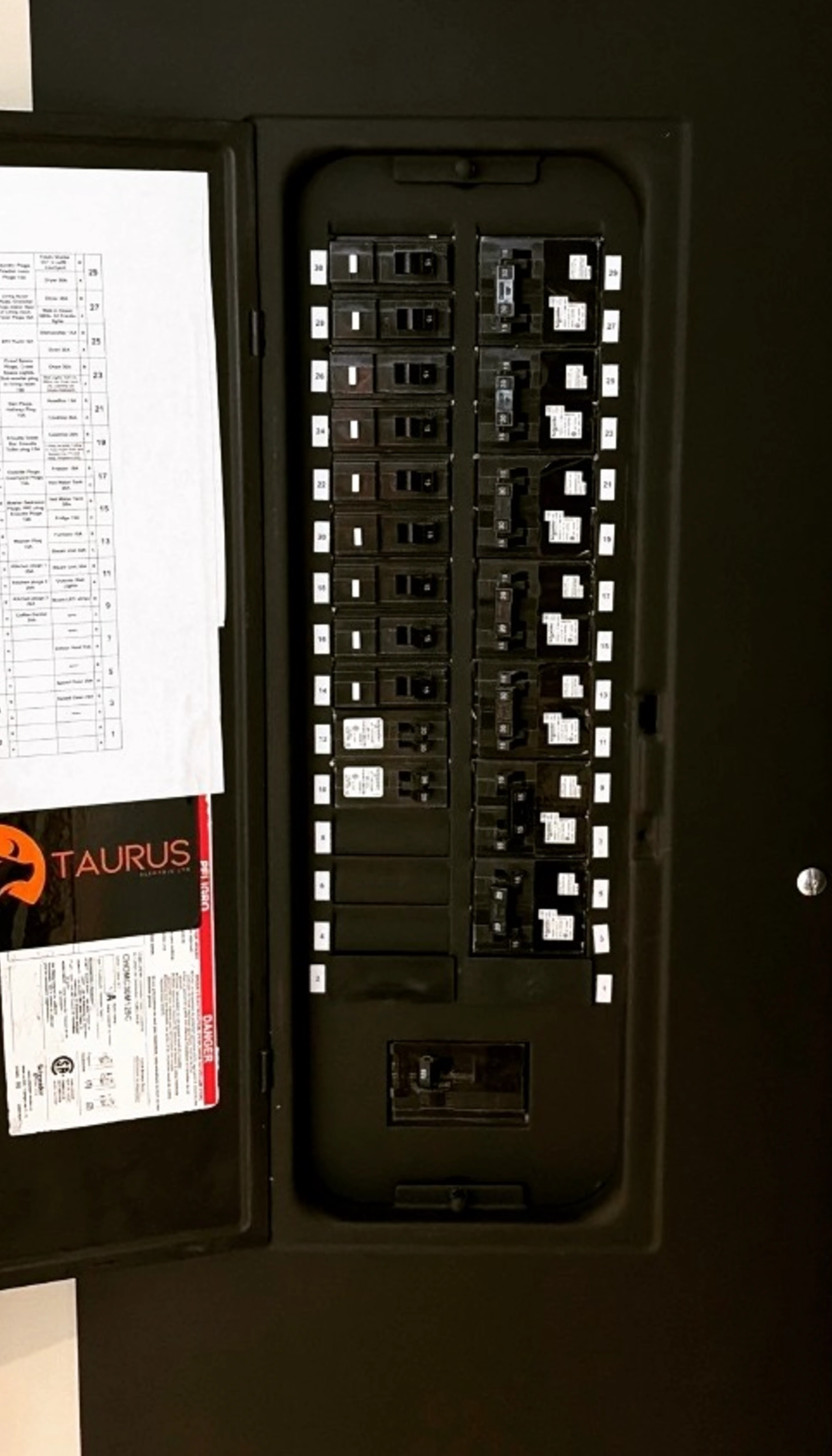
A new breaker panel with every circuit labelled and a Taurus Electric sticker on the door, an example of Taurus Electric's work.
Trusted by Our Community

Happy Taurus Electric Clients


Our reputation is built one project at a time. See what your neighbours have to say about working with Taurus Electric, from quick service calls to complete electrical overhauls.

Robert Jirava
6 months ago
Installed LED lights in my garage. Also added some exterior plugs to the house. The lights were time-intensive and they finished it quickly and did the install PERFECTLY. These guys are the real deal, they are as good as it gets, and Justin treated me fairly even tho it was more work than he anticipated! I would recommend them any day
Katrina Springer
6 months ago
We had a great experience working with taurus electric. They were professional, reliable, and did excellent quality work in our home. They were considerate of our budget without compromising on the outcome, which we really appreciated. We have also worked with them on a professional contracting level, and because we trust them personally, we are confident they bring that same level of care, integrity, and value to our clients. I would absolutely trust their judgment for any future electrical work or jobs. :)
Catherine Beadell
7 months ago
Great experience with this electrical team! They replaced our dining room light fixture, moved a few outlets, and completed a full home electrical inspection. The work was done quickly, professionally, and everything looks perfect. They were on time, respectful of our home, and explained everything clearly. Highly recommend their services!
Megan Weinmeier
8 months ago
Great experience dealing with Justin on 2 occasions. Very helpful, efficient and knowledgeable. Would 100% recommend to anyone needing an electrician.
Meghan Larson
9 months ago
Justin and his team provided an outstanding experience from start to finish. They were punctual, professional, and extremely knowledgeable. The crew maintained a very clean work environment and treated the space with respect. What impressed me most was the level of service, they went above and beyond, completing many little extras without hesitation. Justin always answered my calls, followed through on commitments, and showed up exactly when he said he would. He even made time for a smaller job, which has not been my experience with others in the past. I am beyond pleased with the results and the entire process. I highly recommend Justin and his team to anyone seeking quality workmanship and reliable service.
Dave Curtis
10 months ago
Great service. They came out to help me on a Saturday morning on a day's notice and they were great.
Jason Bush
11 months ago
Justin was very responsive, arrived on time and gave a very reasonable quote and explained all of the options. Would definitely call again!
Rebecca Boldt
a year ago
10/10 Service. Highly recommend Justin and his team!
Philip Hauser
a year ago
The Taurus boys came and installed an electrical device in my home. Great work, knowledgeable service, great price. Highly recommend for any project.
Jacilyn Dumoulin
a year ago
Great service, quick and friendly! Had an electrical issue at 9:30pm and Justin came out right away and got us all fixed up! Highly recommend

Let's Talk About Your Project


Request Your Free Quote
Plan Your Project

Rewire Part of the House, or All of It?

Not every old house needs a full rewire. Some do. Tick what's true for your house and you'll get a straight first answer.

When Partial Makes Sense

The older wiring is confined to part of the house, like an early addition, a basement or the kitchen you're redoing, and the rest is grounded copper in good shape. Or it's aluminum wiring where the connections can be repaired properly.

When a Full Rewire Makes Sense

Knob-and-tube is still live through the house, the walls are opening anyway, your insurer wants all of it gone, or there are so many generations of wiring that nobody can say what's on what. At that point, starting fresh costs less than chasing it.

Local Electrical Help

Knob-and-Tube and Aluminum Wiring

These are the two older systems that send most people looking for a rewire. They're different problems, so they get different answers.

Roughly before 1950

Knob-and-Tube

There's no ground, so there's nothing to carry a fault safely away. It was built to run in open air, so insulation blown in around it later is a concern. And after seventy-odd years, most of it has been spliced into by somebody, which is usually where the trouble is.

You can't safely add new outlets or circuits onto it, and insurers often flag it. Honestly, original knob-and-tube that's been left alone is sometimes in better shape than the splices added later. That still doesn't make it a modern system.

Roughly mid-1960s to late 1970s

Aluminum Wiring

Aluminum wiring isn't a death sentence for a house. Bad connections on aluminum wiring are the problem. Where aluminum meets a switch, an outlet or a splice, the joint can loosen and heat up over time.

So it's usually a repair-or-replace decision: make every connection right, or replace the wire with copper. The next section lays out the repair options in order, from the best to the ones that are only a stopgap.

How It Works

Repairing Aluminum Wiring: Your Options

There are four ways people deal with aluminum branch wiring, and they are not equal. Here they are in the order the US Consumer Product Safety Commission ranks them.


  1. 01 Permanent

    Replace It With Copper

    Pull the aluminum branch wiring and run copper. The CPSC calls this "the best method available". It's also the biggest job, which is why the next two options exist.

  2. 02 Permanent

    Approved Pigtail Connectors

    A short copper lead is joined to every aluminum end with a connector made for it. The CPSC calls a COPALUM crimp "a safe and permanent repair", and AlumiConn "the next best alternative for a permanent repair". Every connection in the house gets done, not just the outlets.

  3. 03 Incomplete

    CO/ALR Switches and Outlets

    Devices rated for aluminum fix the connection at that device and nothing else. The CPSC calls them "at best, an incomplete repair".

  4. 04 Temporary only

    Twist-On Connectors

    Ordinary twist-on pigtails are "not a recommended repair" in the CPSC's words: an emergency, temporary fix for a connection that has already failed, not a solution for the house.

Source: CPSC Publication 516, Repairing Aluminum Wiring. It's a US federal safety guide; the BC electrical code and your insurer set the requirements here. Insurers differ on what they'll accept, so ask yours in writing before you choose a repair.

Permits and Safety

When Your Insurer Flags the Wiring

A letter from your insurer about the wiring often turns up at renewal or when you buy the house, sometimes with a deadline attached. It reads like bad news. Most of the time it's a to-do list.

What Insurers Often Ask For

  • An inspection report. What's actually in the house, written up by a licensed electrician, so they know what they're insuring.
  • Proof of the repair or rewire. What was done, where, and with what: the copper that replaced the knob-and-tube, or the connectors used on the aluminum.
  • Permit and inspection. Evidence the work was done under a permit and passed its inspection.

We do the assessment, which is our electrical safety inspection, do the work under a Technical Safety BC permit, and give you the paperwork to send back. Before any work starts, ask your insurer exactly what they need, in writing. It saves doing the job twice.

Plan Your Project

What a Rewire Costs

These are the same ballpark ranges our project estimator uses, so you can see roughly where your house lands before anyone comes out.

  • $2,000 to $5,000 Partial (targeted circuits)
  • $8,000 to $15,000 Full rewire, smaller home
  • $15,000 to $30,000 Full rewire, larger home

What moves the number is the size of the house, whether we can get at the wiring from an attic or a crawlspace, plaster walls versus drywall, how many walls are already open, whether the panel needs replacing too, and how much patching is in the plan.

Build Your Free Estimate Ballpark ranges only, final pricing follows a free on-site assessment.
What to Expect

Living at Home During a Rewire

Most people can stay in the house while we work. Here's how a rewire runs, so you know what to expect before it starts.

Red circular seal with the words Interprovincial Standard Canada Norme Interprovinciale.

  1. Step 1: Assessment

    We look at the panel, the wiring we can reach, and whatever you've found, then tell you what you've got and what it'll take.

  2. Step 2: Itemized Quote and Permit

    You get a written quote line by line. Once you say go, we pull the electrical permit before any work starts.

  3. Step 3: Power Off in Sections

    We work circuit by circuit and room by room, so most of the house stays on while one part is off.

  4. Step 4: Small Access Holes Where the House Allows

    Where the framing lets us, we fish new cable through attics, crawlspaces and small openings instead of opening whole walls.

  5. Step 5: Inspection

    Before the walls close up, the work is ready for inspection under the permit, and we close the permit out.

  6. Step 6: Patch and Power Up

    Patching happens as planned, every circuit is tested and labelled at the panel, and you get the paperwork.

Plan for some dust and noise, and for parts of the house to be without power for a while. Clear the rooms we're working in, and tell us what can't go off, like the fridge or a home office. The work is done under a Technical Safety BC electrical permit.

House Rewiring Questions

Having it in the house isn't against the law on its own. What you can't do is add onto it, and insurers often won't cover a house with live knob-and-tube until it's been inspected or replaced. If you're buying a house that has it, ask your insurer before you remove subjects, not after.

Find Out What Your House Needs


Fill out the form and we'll get back to you with a detailed, transparent quote. No obligation, no pressure.

Ready to Get Started?

Get Your Free Quote


Ready to upgrade your electrical system or need emergency service? Fill out the form and we'll get back to you within 24 hours with a free, no-obligation quote.